An estrogenic compound is a substance that can mimic or interfere with the action of estrogen (estradiol), the primary female reproductive hormone, binding to its receptors and triggering similar effects to those of natural estrogen (Souza et al., 2024). This interference can disrupt hormonal balance and contributing to women’s health issues (e.g. breast cancer, reproductive problems) (National Institute of Environmental Health Sciences, 2024).
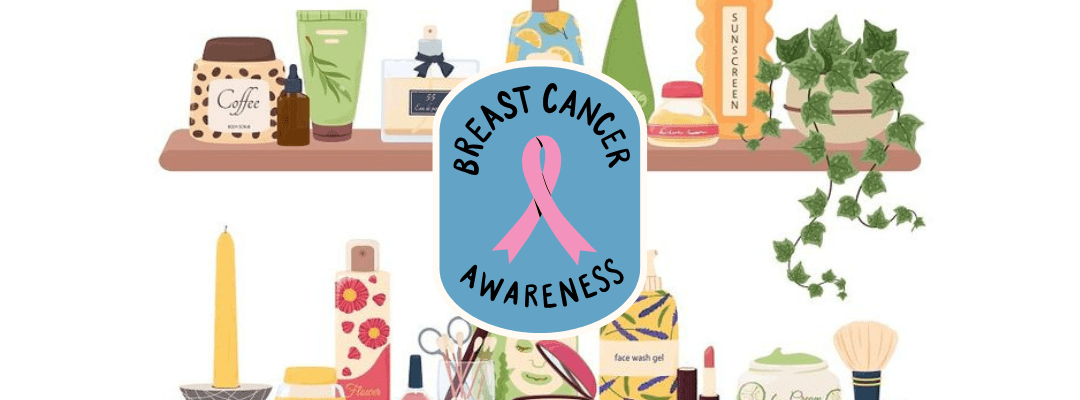
It important to understand how estrogenic chemicals, also known as xenoestrogens (XEs) (Tolu, 2007), affect healthy breast tissue, regarding their role in breast cancer development. Parabens and phthalates are estrogenic compounds that can be found in common consumer products and can be absorbed even at low doses, raising health concerns. These chemicals are used in common everyday personal care products (PCPs) ¾ shampoos, lotions, fragrances, make up, skin care, and deodorants, with higher usage linked to increased urinary levels of parabens (Dairkee et al., 2023). Studies suggest that significant amounts of these chemicals can penetrate breast tissue and higher urinary phthalate levels have been linked with an increased risk of breast cancer (Wu et al., 2021).
Objectives
This research aims to evaluate the impact of parabens and phthalates on healthy breast tissue, determine if the reduction of PCPs containing these chemicals can reverse accumulation in cancer-related changes in breast tissue, and finally analyze these molecular and phenotypic changes in breast tissue before and after reducing PCPs exposure. Overall, seeking to provide insights into the potential health benefits of minimizing exposure of these compounds.
Methods and Materials
Participants were recruited and consented from Breast Cancer Over Time (BCOT), a community-based organization of breast cancer survivors and their supporters. Eligible individuals were included if they regularly used PCPs, had no personal cancer diagnosis and had a regular menstrual cycle; and those who were pregnant, breastfeeding, had breast augmentation, kidney disease or heart disease, were excluded.
For the intervention, these individuals were assigned to either REDUXE group which replaced their usual products with paraben- and phthalate-free alternatives for a three-day period, or control group which had no XEs reduction. To assess the impact of this reduction, breast tissue samples were collected from participants before and after each intervention, for researchers to compare cancer-associated characteristics. Additionally, urine samples were analyzed to measure levels of parabens and phthalates, confirming the effectiveness of reducing their exposure. The collected tissue samples underwent pathway-based functional analysis to evaluate changes in molecular markers linked to cancer.
Results
The study found that reducing daily exposure to parabens and phthalates led to significant changes in breast tissue characteristics. After the three-day intervention, participants showed a decrease in cancer-associated features in their breast tissue samples. Urine analyses confirmed reduced levels of these chemicals, indicating successful exposure reduction. Molecular assessments revealed that the intervention positively impacted key pathways linked to breast cancer risk, suggesting that lowering exposure to these estrogenic compounds may help reverse certain cancer-related changes in healthy breast tissue. Overall, the results highlight the potential health benefits of minimizing exposure to parabens and phthalates.
Conclusion
The findings of this study suggest that even short-term substitution of personal care products containing these chemicals may lead to beneficial changes on a molecular level, potentially lowering the risk of breast cancer risk and improving health outcomes. This highlights the importance of minimizing exposure to estrogenic compounds and supports the need for further research and public awareness regarding the safety of personal care products.
References
Souza DN, Mounteer AH, Arcanjo GS. Estrogenic compounds in drinking water: A systematic review and risk analysis. Chemosphere. 2024 Jul;360:142463. doi: 10.1016/j.chemosphere.2024.142463. Epub 2024 May 29. PMID: 38821126.
Dairkee SH, Moore DH, Luciani MG, Anderle N, Gerona R, Ky K, Torres SM, Marshall PV, Goodson Iii WH. Reduction of daily-use parabens and phthalates reverses accumulation of cancer-associated phenotypes within disease-free breast tissue of study subjects. Chemosphere. 2023 May;322:138014. doi: 10.1016/j.chemosphere.2023.138014. Epub 2023 Feb 4. PMID: 36746253.
Wu AH, Franke AA, Wilkens LR, Tseng C, Conroy SM, Li Y, Polfus LM, De Rouen M, Caberto C, Haiman C, Stram DO, Le Marchand L, Cheng I. Urinary phthalate exposures and risk of breast cancer: the Multiethnic Cohort study. Breast Cancer Res. 2021 Apr 6;23(1):44. doi: 10.1186/s13058-021-01419-6. PMID: 33823904; PMCID: PMC8025373.


 Arbona Health Hub
Great Article
LikeLike