


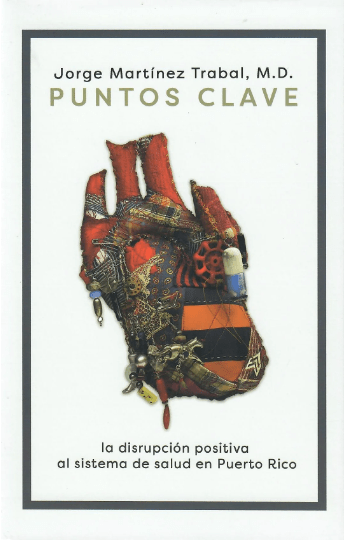
“When a system needs change, settling for the same methods out of tradition is no longer viable.”
-Dr. Jorge Martínez Trabal, Puntos Claves: La disrupción positiva al sistema de salud en Puerto Rico
I was recently revisiting Puntos Claves, a book I had picked up some time ago, and the line quoted above struck me again with urgency. Dr. Jorge Martínez Trabal, a vascular surgeon based in Ponce, Puerto Rico, is not only known for his clinical expertise but also for his leadership as Program Director of the General Surgery Residency at Hospital Episcopal San Lucas and his contributions as a professor at Ponce Health Sciences University. Internationally recognized for contributing to the development of the Hybrid Venous Thrombectomy procedure, a groundbreaking intervention for treating blood clots, he has paired innovation with a strong commitment to public health and equitable care on the island. As both a physician and health policy advocate whose work has shaped recent debates on Puerto Rico’s healthcare crisis, Dr. Martínez Trabal challenges us to embrace “positive disruption.” His words speak directly to the persistent structural barriers that define Puerto Rico’s healthcare system and how they unfold daily in hospitals, clinics, and communities across the island.
This reorganization of Puerto Rico’s healthcare system is not merely a response to crisis, but a necessary shift toward equity and sustainability. The changes being proposed are intentional, rooted in fairness, access, and long-term resilience. As someone who has navigated the system both as a patient and as a student aspiring to contribute to medicine, I know firsthand how these systemic gaps translate into live realities: long waits in transfusion centers at the local oncological hospital, packed emergency rooms, entire municipalities without specialists, and an ever-present fear of what will happen when the next disaster arrives. To me, transformation is more than a policy matter, but a question of survival and dignity for our communities.
A system under strain
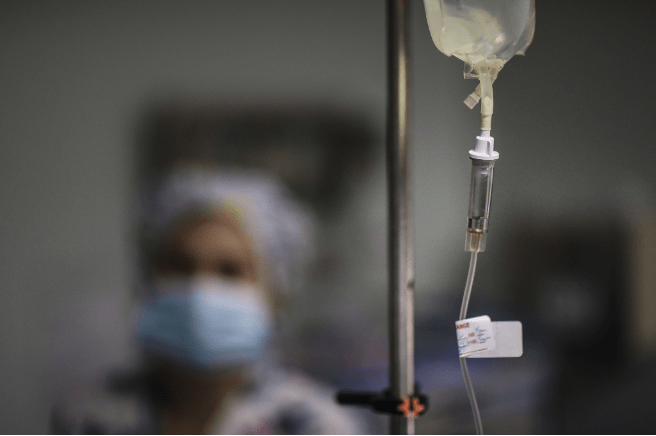
Puerto Rico’s healthcare system is increasingly overwhelmed by rising demand, declining hospital capacity, and a shrinking medical workforce. Hospital infrastructure has weakened over the past decade, while demand for services, especially in the aftermath of disasters, has intensified. Following Hurricanes Irma and María, the island saw a surge of infectious diseases, from leptospirosis linked to contaminated floodwaters to respiratory and gastrointestinal illnesses caused by prolonged power outages and lack of clean water. At the same time, mental health claims soared. In municipalities such as Caguas and Ponce, clinics reported unprecedented spikes in anxiety, depression, and post-traumatic stress disorder, with wait times for psychiatric care stretching for months (Santiago et al., 2024; Chandra et al., 2021). These cases underscore how disasters do not just damage physical infrastructure: they fracture the very fabric of community well-being, leaving the most vulnerable patients without timely care.
At the same time, physician migration continues to erode the system. Nearly 500 doctors leave the island each year, more than the number trained locally, creating deep regional disparities. Some municipalities lack specialists altogether (WLRN News, 2023). Recent studies have warned that this uneven landscape, if unaddressed, will further undermine equitable access to care (Rodríguez-Díaz et al., 2024; Santini-Domínguez et al., 2025). Compared with the U.S Virgin Islands and Guam, which face similar shortages and dependency on federal funding (Hall et al., 2018; Stolyar et al., 2021), Puerto Rico’s situation underscores the structural commonalities across U.S territories: fragile health infrastructure, dependence on off-island referrals, and reliance on a workforce that is constantly in flux.
Policy, Infrastructure & Progress
Temporary federal relief, such as the increase in Medicaid funding through FY2027, has provided short-term stability. Yet the looming “funding cliff” in 2028 raises alarms about sustainability. Locally, in May 2025, Governor Jennifer González announced over $24 million in funding for medical resident retention and pledged 60% of the general budget to healthcare, education, and public safety (AP News, 2025). These measures signaled political will, but frustration remains widespread. During a 72-hour blackout earlier that year, hospitals and emergency systems struggled to function: an acute reminder that outdated infrastructure and bureaucratic inefficiencies cannot be solved by pledges alone.
Healthcare professionals, especially younger physicians, continue to face discouraging realities: reimbursement rates that are sometimes less than half of U.S. averages (Roman, 2015), underfunded facilities, and limited institutional support. These factors weigh heavily in the decision to migrate. Stakeholders have proposed strengthening rural health networks, expanding telemedicine, and creating better residency incentives. While promising on paper, implementation consistently lags behind proposals, revealing a gap between political rhetoric and on-the-ground realities. Without meaningful investment and accountability, the cycle of short-term fixes will persist.

Revisiting Puntos Claves
In Puntos Claves, Dr. Martínez Trabal does not prescribe a singular solution but instead challenges clinicians, policymakers, and citizens alike to reconsider how we define progress. His call for positive disruption is about building a system rooted not just in tradition, but in creativity, adaptability, and equity. This call specifically resonates when viewed alongside the realities of Puerto Rico’s healthcare crisis: the outward migration of specialists, the resilience of hospitals in the wake of blackouts, and the everyday perseverance of communities rebuilding after disasters. What makes the book so timely is that it does not shy away from the complexity of healthcare reform. It recognizes that transformation is not just about policy but mindset. Placing yourself in a position of questioning: What kind of system are we building, and for whom? If you are looking for a thoughtful, well-grounded exploration of the ideas behind health system transformation in Puerto Rico, Puntos Claves is worth your time. It is a book that does not just diagnose the problem but invites us as citizens to imagine a healthier, more resilient future.
Looking Ahead
Puerto Rico’s challenges are real, but so is its potential. Across the island, healthcare workers, researchers, and communities are already leading innovation. Projects such as Proyecto Arbona, Iniciativa Comunitaria, and PRCONCRA show that models of community-centered healthcare can thrive even within strained systems. The question now is whether our political, financial, and infrastructural systems will support these efforts. In this season of reflection and rebuilding, perhaps the greatest opportunity lies not in returning to what once was, but in having the courage to build what could be.
References
- Martínez Trabal, J. (2023). Puntos Claves: La disrupción positiva al sistema de salud en Puerto Rico. Editorial Raíces.
- Chandra, A., Marsh, T., Madrigano, J., Simmons, M. M., Abir, M., Chan, E. W., … Nelson, C. (2021). Health and social services in Puerto Rico before and after Hurricane Maria. Rand Health Quarterly, 9(2), 10. https://doi.org/10.7249/RR2603
- Santiago, L. M., et al. (2024). Spatiotemporal analysis of post-disaster infectious and mental health conditions in Puerto Rico. Scientific Reports, 14(1), 8123. https://doi.org/10.1038/s41598-025-89983-1
- WLRN News. (2023, December 4). Puerto Rico’s mortality rate worsening as the island’s health care system collapses. https://www.wlrn.org/health/2023-12-04/puerto-rico-mortality-rate-healthcare-system
- Rodríguez-Díaz, C. E., et al. (2024). Racialized structural inequities and health outcomes in Puerto Rico. American Journal of Public Health, 114(2), 160–162. https://doi.org/10.2105/AJPH.2024.307585
- Santini-Domínguez, R., Martinez-Trabal, J., & Gonzalez-Diaz, G. (2025). Puerto Rico’s specialist crisis—A wake-up call for health equity and action. JAMA Health Forum, 6(6), e251949. https://doi.org/10.1001/jamahealthforum.2025.1949
- Hall, C., Rudowitz, R., Artiga, S., & Lyons, B. (2018). One year after the storms: Recovery and health care in Puerto Rico and the U.S. Virgin Islands. Kaiser Family Foundation. https://www.kff.org/report-section/one-year-after-the-storms/
- Stolyar, L., Tolbert, J., Corallo, B., Rudowitz, R., Sharac, J., Shin, P., & Rosenbaum, S. (2021). Community health centers in the U.S. territories and Freely Associated States. Kaiser Family Foundation. https://www.kff.org/report-section/community-health-centers-in-the-u-s-territories-and-the-freely-associated-states-issue-brief/
- Associated Press. (2025, May 12). Puerto Rico governor pledges to improve power grid after repeated outages. https://apnews.com/article/d966a3dc81920c1ffa4b231b7e2bc86b
- Roman, J. (2015). The Puerto Rico healthcare crisis. Annals of the American Thoracic Society, 12(12), 1760–1763. https://doi.org/10.1513/AnnalsATS.201508-531PS
- Santiago-Santiago, A. J., Rivera-Custodio, J., … Grove, K. (2024). Puerto Rican physician’s recommendations to mitigate medical migration. Health Policy Open, 7, 100124. https://doi.org/10.1016/j.hpopen.2024.100124
- Rios, C. C., Ling, E. J., … Perez, V. J. (2021). Puerto Rico health system resilience after Hurricane Maria. Frontiers in Communication, 5, 593939. https://doi.org/10.3389/fcomm.2020.593939
- McSorley, A.-M. M., Rivera-González, A. C., … Ortega, A. N. (2024). U.S. federal policies and inequities in Puerto Rico. American Journal of Public Health, 114(S6), S478–S484. https://doi.org/10.2105/AJPH.2024.307585
- FTI Consulting. (2025). Puerto Rico healthcare workforce study. https://www.fticonsulting.com/-/media/files/insights/reports/2025/mar/puerto-rico-healthcare-workforce-study.pdf
 Arbona Health Hub