


Introduction:
Neuroscience is the study of the brain and nervous system, and it incorporates a wide range of topics, from how the brain processes information to how it controls movement and behavior. The brain and nervous system are incredibly complex and fascinating parts of the human body. Unfortunately, there are many diseases that can impact the brain and nervous system, ranging from neurodegenerative conditions like Progressive Multifocal Leukoencephalopathy (PML), Alzheimer’s disease (AD), Parkinson’s disease (PD), and many others.
Today, our focus is on Multiple Sclerosis (MS), a complex and challenging condition that also falls within this spectrum of neurological disorders.
What is Multiple Sclerosis?
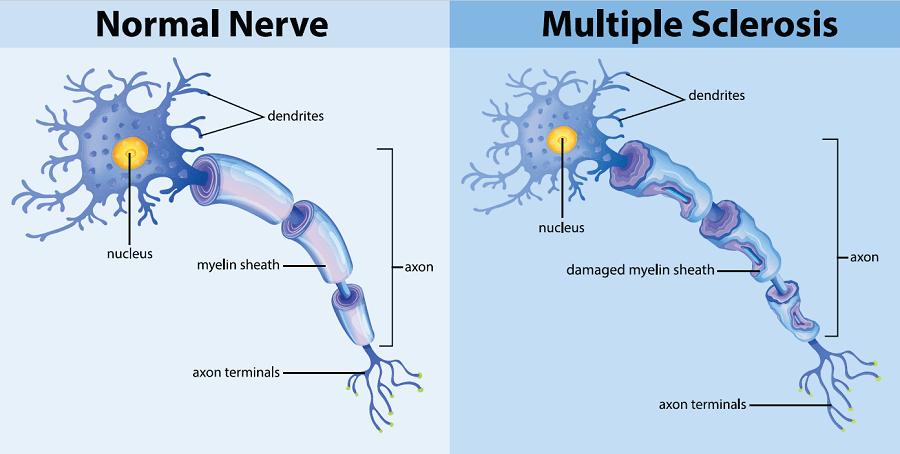
MS is a chronic autoimmune disease that affects the central nervous system, leading to inflammation and damage to the myelin sheath that surrounds nerve fibers. Similar to the insulation around wires, when that insulation gets damaged, it disrupts communication between the brain and the body, leading to a wide range of symptoms, including fatigue, muscle weakness, vision problems, and cognitive impairment. While the exact cause of MS is unknown, it is believed to be a combination of genetic and environmental factors.
Potential risk factors for Multiple Sclerosis include:
- Adolescent Obesity
- Smoking
- Vitamin D deficiency
- Epstein-Barr Virus infection
Types of Multiple Sclerosis

- Relapsing-remitting MS is the most common form, featuring attacks followed by periods of remission where individuals recover; these attacks may be weeks, months, or years apart.
- Secondary-progressive MS typically follows a history of attacks, with individuals experiencing a gradual decline in function over time, especially if left untreated.
- Primary-progressive MS is less common and showcases progressively worsening symptoms from the beginning, without distinct relapses or exacerbations.
- Progressive-relapsing MS is the rarest type, marked by a steady decline in symptoms from the start, with occasional acute relapses occurring during the disease course.
Early Signs of Multiple Sclerosis
Diagnosis of MS can be difficult. It is based on the patient history and physical findings were there is history or evidence of at least two attacks separated in space and time of at least one month that can’t be explained by one single lesion. In simpler terms, it is a diagnosis of exclusion.
Based on the McDonald Criteria:
- Diagnosed as “MS” if the criteria are fulfilled and there is no better explanation for the clinical presentation
- “Possible MS” is given if MS is suspected, but the McDonald criteria are not completely met
- “Not MS” is given if another diagnosis better explains the clinical presentation
Recent research has focused on identifying the early signs and symptoms of MS, which could aid in early recognition and treatment of the disease. The MS prodrome refers to the period before the onset of typical MS symptoms, during which individuals may experience various signs and symptoms that are not specific to MS but could indicate the disease. These symptoms may include mood and anxiety disorders, cognitive impairment, fatigue, pain, and sleep disturbances.
Early Symptoms of MS may include:
- Visual disturbances like blurred or double vision
- Optic neuritis, leading to eye pain during movement and swift vision deterioration
- Muscle weakness, typically in the hands and legs, coupled with muscle rigidity and painful spasms
- Sensations of tingling, numbness, or pain in the arms, legs, torso, or face
- Awkwardness, particularly challenges in maintaining balance while walking
- Issues with bladder control
- Occasional or persistent feelings of dizziness
Other signs or symptoms of MS:
- Uhthoff’s Phenomenon – symptoms worsen with exercise
- Lhermitte’s sign – Sensation of electric shock down the spine and arms when the patient flexes their neck
Potential Biomarkers of the MS Prodrome
Researchers are also investigating potential biomarkers of the MS prodrome, which are like clues that could help doctors identify the disease at an earlier stage. One such biomarker is radiologically isolated syndrome (RIS), which involves certain findings on brain scans that could suggest the presence of MS. Additionally, specific patterns in the cerebrospinal fluid and spinal cord lesions on MRI scans are being studied as potential biomarkers of the MS prodrome.
Importance of Early Recognition and Treatment
Early recognition and treatment of MS are crucial for improving outcomes and reducing disability. While there is currently no cure for MS, early treatment with disease-modifying therapies can slow the progression of the disease and improve quality of life. By identifying potential biomarkers and clinical features of the MS prodrome, healthcare providers may be able to diagnose and treat MS earlier, potentially improving outcomes for individuals with the disease. If you suspect a possibility of MS, it is imperative to consult with a healthcare professional.
Conclusion
Identifying the early signs and symptoms of multiple sclerosis (MS) is crucial for early recognition and treatment of the disease. The early phase of the disease may present with various non-specific symptoms, and researchers are exploring potential biomarkers to aid in early detection. Early recognition and treatment of MS are essential for improving outcomes, and individuals experiencing symptoms should seek medical attention for proper evaluation and care.
References
Makhani, N., & Tremlett, H. (2021). The multiple sclerosis prodrome. Nature reviews. Neurology, 17(8), 515–521. https://doi.org/10.1038/s41582-021-00519-3
https://www.ninds.nih.gov/health-information/disorders/multiple-sclerosis
Types of MS image credit: https://upload.wikimedia.org/wikipedia/commons/thumb/9/93/Types_of_multiple_sclérosis.png/1600px-Types_of_multiple_sclérosis.png?20171202124027
 Arbona Health Hub